
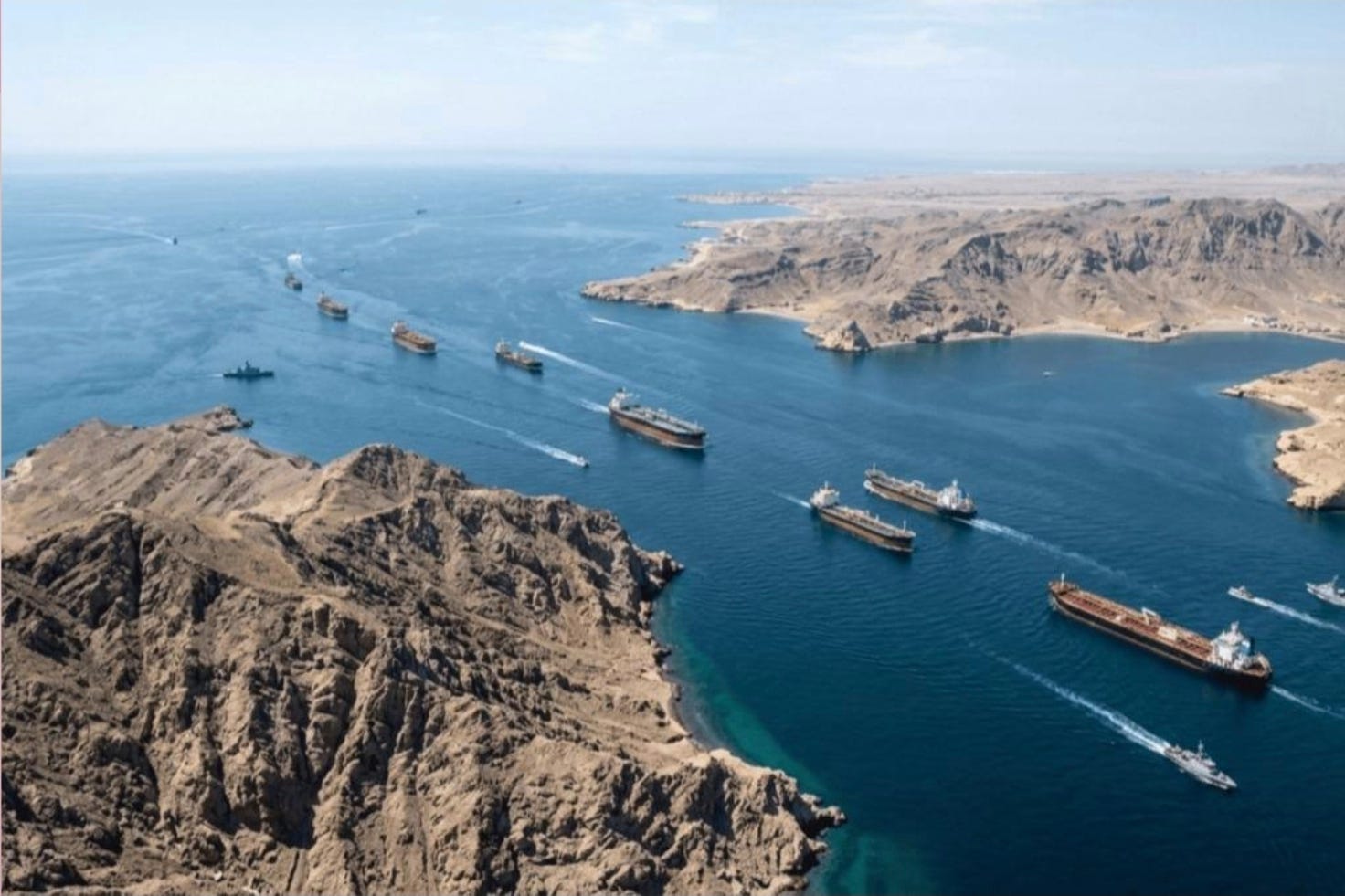
🚢 PROJECT FREEDOM AND MARITIME ESCORTS: The United States announced a maritime initiative aimed at evacuating approximately 23,000 civilians from 87 countries stranded in the Persian Gulf. The operation includes U.S. military escorts for commercial vessels, framed as a defensive effort to reopen the Strait of Hormuz while maintaining a rules-of-engagement posture that limits force unless directly engaged.
⚠️ IRAN’S ACTIONS IN THE STRAIT OF HORMUZ: U.S. officials accused Iran of mining international waters, targeting commercial vessels, and attempting to impose control over maritime access. These actions were characterized as an effort to normalize restricted transit and assert unilateral authority over a critical global shipping lane.
❗️ U.S. MILITARY POSTURE AND DETERRENCE: Washington signaled readiness to support allies and respond decisively to escalation, emphasizing that military force remains available to protect national interests. Statements highlighted confidence in U.S. leverage and warned that Iran would face consequences if it attempts to challenge U.S. resolve.
🛡️ PROTECTED TRANSIT ZONE: The U.S. outlined plans to establish a secured maritime corridor in the Strait of Hormuz, supported by naval and air assets. The objective is to ensure safe passage for commercial shipping while preventing Iran from exerting control over international waterways.
💰 ECONOMIC PRESSURE AND SANCTIONS: U.S. officials stated that ongoing sanctions and maritime pressure are contributing to economic strain within Iran, including inflation and currency instability. The continuation of “maximum pressure” measures was presented as a means to increase leverage over time.
☢️ NUCLEAR CONCERNS AND STRATEGIC WARNING: U.S. leadership expressed concern that Iran’s behavior aligns more closely with pursuit of a military nuclear capability than a civilian program. Officials warned that a nuclear-armed Iran could extend coercive leverage beyond maritime routes to broader global dynamics.
🏛️ INTERNATIONAL RESPONSE AND UN ACTION: The United States called on the United Nations to condemn Iran’s actions and demand removal of mines and cessation of attacks on commercial vessels. Diplomatic efforts also include pushing for broader international isolation if Iranian actions continue.
👥 IRAN REGIME VS. IRANIAN PEOPLE: U.S. messaging emphasized a distinction between the Iranian population and its leadership, describing the public as affected by regime policies. Officials indicated that negotiations could address nuclear issues while offering Iran a pathway toward economic recovery if it shifts course.
⏸️ TEMPORARY PAUSE IN PROJECT FREEDOM: The United States confirmed a short-term pause in maritime escort operations following requests from regional actors and reported progress in negotiations with Iran. The broader blockade remains in place while efforts continue toward a potential agreement.
🎯 ISRAELI STRIKE CONSIDERATIONS: Israeli officials communicated interest in resuming military action against Iran, citing skepticism about the effectiveness of ongoing negotiations. Planning discussions have included potential targeting of Iranian oil infrastructure amid the current regional escalation.
📢 U.S. WARNING ON AGREEMENT OUTCOME: President Trump outlined a conditional pathway in which an agreement would lead to reopening the Strait for all maritime traffic. He warned that failure to reach terms would result in renewed and intensified military action.
🔁 If this gave you clarity — forward it.
🗨️ Join the discussion, read on web & subscribe by email: https://www.israelrealtime.com/p/subscribe


