
⚓ U.S. FORCE DEPLOYMENT, IRGC CONTROL OF HORMUZ, AND STALLED IRAN TALKS SHAPE REGIONAL POSTURE
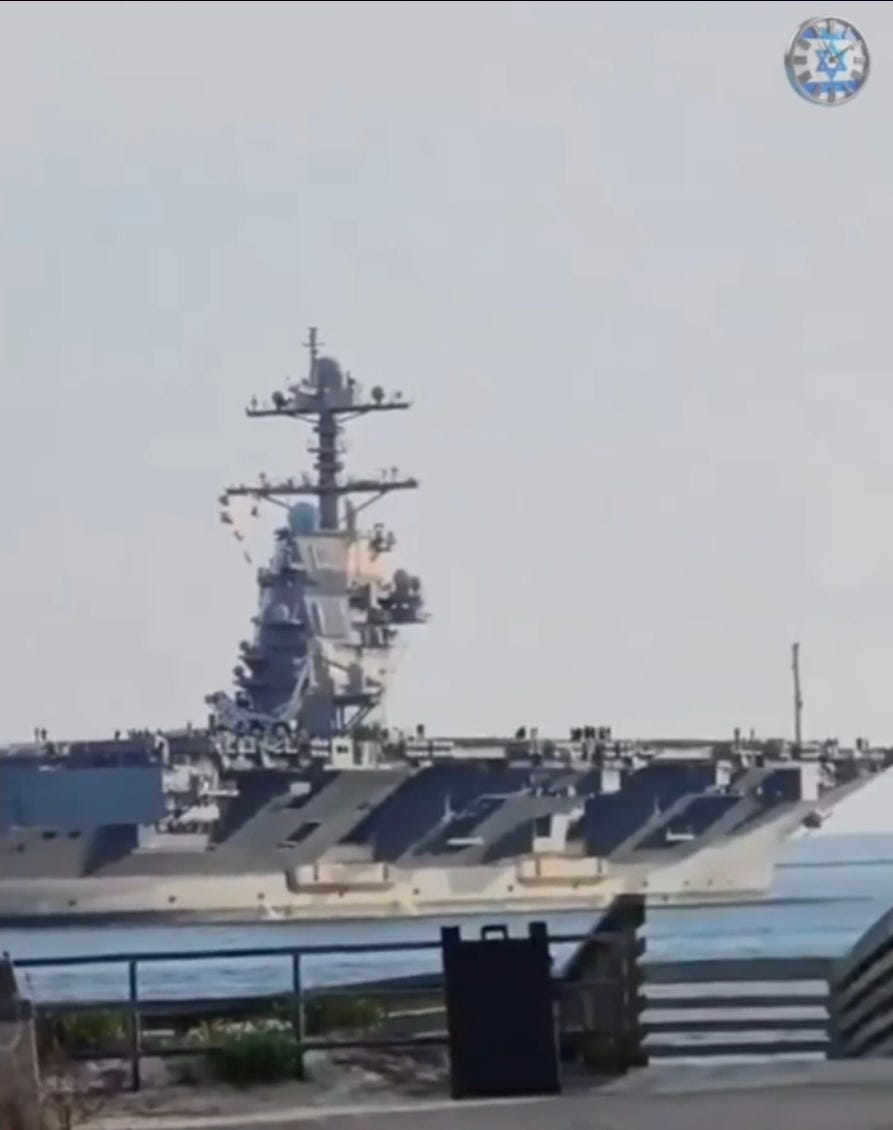
🎯 U.S. Military Deployment and Readiness: A large-scale U.S. Air Force airlift to the Middle East is underway alongside a naval repositioning that places the aircraft carrier Gerald Ford in the Red Sea after transiting the Suez Canal with two destroyers. A senior U.S. official indicated the move is intended to strengthen readiness for potential renewed strikes on Iran if the ceasefire is not extended.
🛡️ Israeli Assessments and Operational Preparedness: Israeli officials assess that the closure of the Strait of Hormuz increases the likelihood of renewed conflict. Military sources state that Israel and the U.S. are prepared for a sudden ceasefire collapse, with updated target banks, continuous intelligence monitoring, and Iranian energy infrastructure identified among potential targets.
⚓ IRGC Control and Hormuz Enforcement Measures: The Islamic Revolutionary Guard Corps, under Ahmad Vahidi, has taken a central role in both military and negotiation processes, including direct involvement of senior commanders in diplomatic discussions in Islamabad. The IRGC has also initiated maritime enforcement actions, deploying drones with loudspeakers to declare a full closure of the Strait of Hormuz and warn all vessels against transit.
⚠️ U.S. Countermeasures and Global Enforcement Strategy: The United States is preparing to intercept and seize sanctioned Iranian oil shipments in international waters across multiple regions, expanding enforcement beyond the Middle East. At the same time, President Donald Trump reportedly declined a proposal to seize Kharg Island due to concerns over troop vulnerability, while Russia has warned Iran of a high likelihood of a potential U.S. ground operation.
📣 Iranian Leadership Positioning and Threat Messaging: Iranian officials have asserted their intent to control the Strait of Hormuz through either negotiation or force. Public statements from senior leadership reject U.S. positions and emphasize readiness to respond militarily to any perceived miscalculation.
📉 Negotiation Breakdown and Diplomatic Constraints: A second round of U.S.–Iran negotiations is not expected to proceed as planned, with Pakistani sources citing reduced optimism due to Iran’s refusal to compromise on uranium enrichment. Additional reporting indicates China may consider holding Iran’s highly enriched uranium if jointly requested by both parties.
🇺🇸 U.S. Political Messaging and Strategic Objectives: President Donald Trump reaffirmed strong support for Israel, describing it as a reliable and capable ally. Senator Lindsey Graham stated that the IRGC, rather than Iran’s foreign ministry, is directing developments, and outlined U.S. priorities including control of the Strait of Hormuz, removal of enriched uranium, and restrictions on Iran’s missile and drone programs.
🛰️ Israeli Internal Security Incident: The Shin Bet has arrested two Israeli Air Force soldiers on suspicion of long-term espionage on behalf of Iran, according to i24 News. The case reflects ongoing counterintelligence concerns within Israel’s security establishment.
🔍 Additional Internal Iranian Actions: The IRGC Intelligence Organization reported the arrest of multiple cells allegedly linked to the United States, the United Kingdom, and Israel across several Iranian provinces. Authorities accused those detained of espionage, smuggling, and planning attacks.
🗨️ Join the discussion, read on web & subscribe by email: https://www.israelrealtime.com/p/subscribe
🔁 If this gave you clarity — forward it.


