
πΈ REGIONAL POSITIONING, HEZBOLLAH FUNDING, AND EUROPE
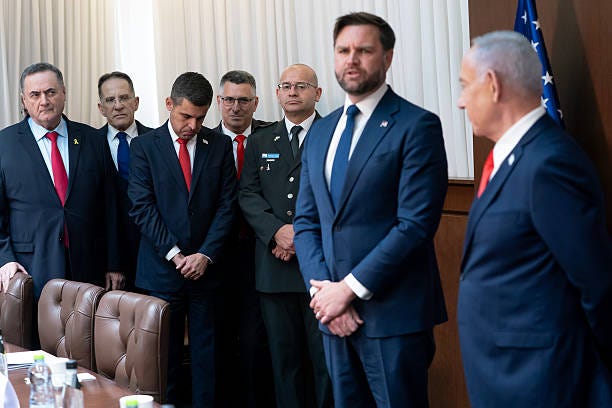
πΊπΈ U.S.-ISRAEL DISAGREEMENTS DRAW PUBLIC ATTENTION: U.S. Vice President JD Vance stressed the scale of American support for Israel's defense, saying: "Over the last three months, two-thirds of the defensive weapons that have protected Israel have been built by American hands and paid for by American tax dollars."
Vance added: "The problem for Israel is not Donald Trump, and anybody in Israel who thinks their biggest problem is the President of the US needs to wake up and smell the reality of the situation that country is in."
Addressing reports that Netanyahu was angry over the agreement, Vance said: "I saw the Axios report that says Netanyahu is fuming. That's not reflective of the conversations that I've had with him. Maybe he is saying something to somebody else that he is not saying to me."
π‘οΈ REGIONAL CONCERNS OVER IRAN'S FUTURE FUNDING OF HEZBOLLAH: Iranian, Lebanese, and regional sources reported that Tehran has informed Hezbollah it intends to increase funding "as soon as possible" once Iranian assets are unfrozen under the agreement.
Clause 11 of the reported framework allows the United States to unfreeze Iranian assets in response to "progress of negotiations towards a final agreement."
Analysts note that expanded access to frozen assets and sanctions relief could allow Tehran to reconstitute parts of the Axis of Resistance, particularly Hezbollah, during the 60-day negotiation period.
Israel significantly degraded Hezbollah during the October 7 War. Hezbollah's resupply network was further disrupted by the collapse of the Assad regime in Syria, while Iran's own financial constraints and reconstruction needs complicated efforts to rebuild allied forces.
Iran reportedly provided Hezbollah with roughly $1 billion between the 2024 and 2026 wars. Analysts note that the extent to which Axis of Resistance factions remain contained or weakened after nearly three years of war may depend heavily on how much funding Iran can provide.
πΉ IRAQ, GULF STATES, AND REGIONAL NORMALIZATION: According to Iraqi political sources, the United States has reportedly linked economic support for Iraqi Prime Minister Ali al Zaydi's government to conditions including disarming Iranian-backed militias and dismantling their financial networks.
Washington also reportedly demanded the removal of Popular Mobilization Forces leaders associated with Iranian-backed militias before further integration into official Iraqi security institutions.
Saudi Foreign Minister Faisal bin Farhan said Iran attacked not only Saudi Arabia but all GCC countries, creating "a significant loss of trust."
He said relations with Iran had only begun to recover after the Beijing understanding, but have now regressed. He added that rebuilding trust must come before any serious discussion of economic cooperation or mutual investment.
The Saudi foreign minister also said Israel and the Palestinians must be part of any regional conversation, stating: "Israel is part of the region. That means they should be part of the regional conversation, but Palestine is also part of the region."
βοΈ ISRAEL FREEZES CONTACTS WITH EU FOREIGN POLICY CHIEF: Foreign Minister Gideon Saar announced that Israel is severing all contact with EU foreign policy chief Kaja Kallas following reports that she compared Israel to apartheid-era South Africa during her visit to Mexico.
Saar stated that he will maintain the freeze until Kallas retracts what he called a "blood libel" against Israel.
π If this gave you clarity β forward it.
π Full updates & discussion: https://www.israelrealtime.com


