
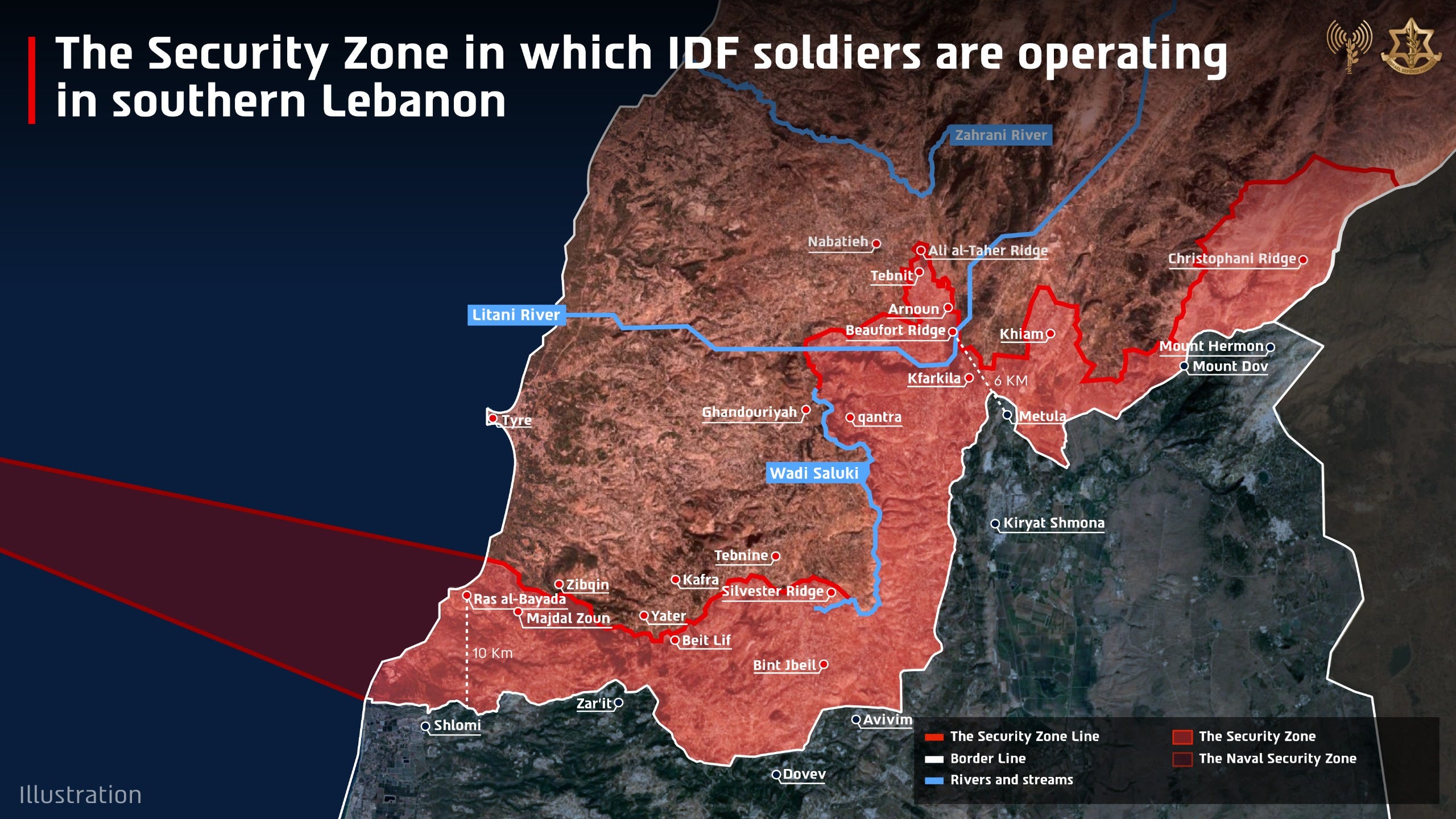
๐ก๏ธ Security Zone Operations and Casualty Incident: The IDF released details of the incident in southern Lebanon in which Master Sgt. (res.) Alexander Filin, 29, of Haifa, serving with the 36th Division headquarters, was killed. According to the military's initial investigation, a Hezbollah explosive device detonated as the deputy commander of the 36th Division, his forward command team, and additional soldiers were moving along the Litani River.
Several officers and soldiers were wounded in the blast, including the division's deputy commander and a battalion commander, both of whom sustained moderate injuries. Additional soldiers were lightly wounded and evacuated for treatment. Following the incident, the IDF carried out artillery strikes against Hezbollah infrastructure in the area.
๐ฏ Continued Military Activity in Southern Lebanon: The Israeli Air Force struck a Hezbollah rocket launcher within minutes of a launch toward IDF forces. According to the military, the launcher had been prepared for additional attacks, and secondary launches occurred as a result of the strike, with rockets falling in open areas inside southern Lebanon.
Lebanese media also reported a fatal Israeli drone strike near Kfar Tebnit, close to Nabatieh. Lebanese authorities said the strike targeted a vehicle in an area where Israeli forces have been operating in recent days.
๐ Israeli Position on the Security Zone: The IDF stated that it remains deployed in a Security Zone extending approximately 10 kilometers into Lebanese territory, citing ongoing operational requirements. The military said forces will continue operating in the area to remove threats and strengthen security for northern Israeli communities while maintaining control of territory according to operational needs.
The IDF also called on the Lebanese Army to coordinate activities with Israeli forces and avoid entering the operational zone while military activity continues.
๐ค Israel-Lebanon Ceasefire and Withdrawal Discussions: Israeli and Lebanese officials continue discussing the future of Israeli deployments in southern Lebanon. A senior Israeli official told Reuters that negotiations with the United States regarding the continued presence of Israeli forces remain ongoing, while direct Israel-Lebanon negotiating teams are expected to reconvene next week.
According to Lebanese officials cited by Al-Hadath, the upcoming talks are viewed as significant for efforts to establish a permanent ceasefire. Discussions are expected to focus on a potential Israeli withdrawal from southern Lebanon and proposed timetables for pilot implementation zones.
๐๏ธ Lebanese Position and U.S. Involvement: Lebanese officials stated that the reported U.S.-Iran Memorandum of Understanding contains provisions related to ceasefire efforts and could increase pressure for a gradual Israeli withdrawal. At the same time, Beirut reiterated its intention to continue deploying the Lebanese Army throughout southern Lebanon and maintain the principle that weapons remain under state authority.
President Trump said he has encouraged Prime Minister Netanyahu to adopt a more restrained approach toward Hezbollah-related targets, while emphasizing the strength of the U.S.-Israel relationship. Trump acknowledged that the two leaders have occasionally differed regarding the scope of Israeli responses to Hezbollah threats.
โ ๏ธ Disputes Over the Meaning of the Agreement: Despite the signing of the U.S.-Iran agreement, military activity between Israel and Hezbollah continued. Hezbollah, Iranian officials, and Iranian media have argued that the agreement requires Israel to halt operations against Hezbollah and eventually withdraw from southern Lebanon.
However, U.S. officials have not publicly described any such requirement as part of the agreement, highlighting continuing differences over how various parties interpret its implications.
๐ If this gave you clarity โ forward it.
๐จ๏ธ Join the discussion, read on web & subscribe by email: https://www.israelrealtime.com/p/subscribe


