
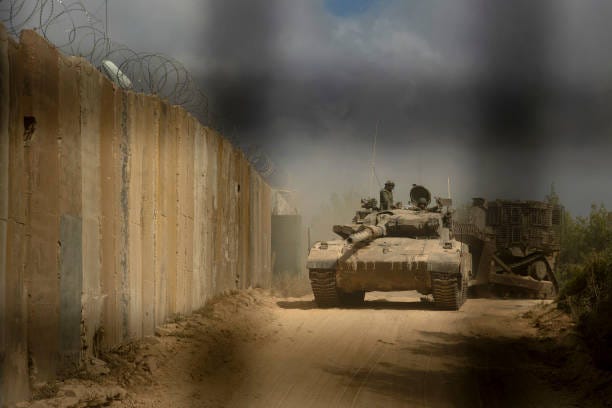
🛡️ ISRAELI ASSESSMENTS AND REGIONAL IMPLICATIONS: Israeli officials increasingly signaled concern that the emerging Washington-Tehran framework could directly affect the Lebanon front. A source told Yedioth Ahronoth that Israel possesses information indicating the agreement includes a ceasefire arrangement covering Lebanon. Israeli officials warned that any Hezbollah attack on northern Israeli communities would trigger strikes on Beirut’s southern suburbs and stressed that Israel “will not accept the unification of fronts.”
Security sources told the Israeli Broadcasting Authority that the IDF is preparing to halt ground operations in Lebanon under the developing framework, although Israel does not intend to withdraw from the southern Lebanese security zone and plans to address the matter during negotiations. A senior Israeli official told Channel 12: “This is a shitty agreement.”
American officials sought to reassure Israel regarding operational freedom under the arrangement. A senior US official told the Israeli Broadcasting Authority that no country would be expected to surrender its right to self-defense and stated that Washington would not expect Israel to refrain from responding if attacked by Iran.
A senior diplomatic source told Israel Hayom that Israel would not be required to sign any agreement with Tehran and would retain freedom of action, although military responses would require coordination with Washington. The same source stated that the proposed memorandum preserves Israel’s ability to strike current or emerging threats in Lebanon while maintaining existing ceasefire arrangements. According to the source, Iran unsuccessfully attempted to secure an Israeli withdrawal from southern Lebanon as part of the negotiations.
Axios also reported that President Trump informed Prime Minister Netanyahu during a Thursday evening call that Washington expects to finalize an agreement with Iran within days. Israeli officials reportedly remain privately skeptical that Iran could use prolonged negotiations and renewed oil exports to stabilize its economy without making meaningful nuclear concessions.
🇱🇧 LEBANON AND HEZBOLLAH RESPONSES: Lebanese MP Hussein al-Hajj Hassan, a member of Hezbollah’s Loyalty to The Resistance Bloc, stated that Iran informed Hezbollah that Lebanon is included in the ceasefire framework and claimed Israel would withdraw from Lebanese territory under the arrangement.
Hassan stated that Hezbollah would not accept a return to the situation that existed before March 2, 2026, and said the organization would not commit to any arrangement before Israel and the United States do so first.
Lebanese Prime Minister Nawaf Salam acknowledged that Lebanon is affected by the Islamabad negotiations and their regional consequences but emphasized that “no one is negotiating on behalf of Lebanon.”
Lebanese Foreign Minister Youssef Rajji told Le Figaro that efforts to disarm Hezbollah are intended to allow Lebanon “to live in a normal country.” He argued that Hezbollah’s military activity damages Lebanon’s economy, harms tourism, and draws the country into conflicts unrelated to Lebanese national interests.
🔁 If this gave you clarity — forward it.
🗨️ Join the discussion, read on web & subscribe by email: https://www.israelrealtime.com/p/subscribe


