π― ISRAEL AND U.S. EXPAND COORDINATED STRIKES ON IRANIAN NUCLEAR, MILITARY, AND NAVAL INFRASTRUCTURE AS REGIONAL THREATS INTENSIFY
βοΈ Joint aerial coordination: Footage confirms operational integration between the Israeli Air Force and U.S. Air Force, including mid-air refueling, supporting extended-range strike capabilities and sustained mission duration.
π― Strikes on nuclear and weapons production infrastructure: More than 50 Israeli Air Force fighter jets conducted three coordinated strike waves across multiple locations in Iran, targeting facilities tied to plutonium production, uranium enrichment processes, and weapons manufacturing. The IDF assessed the operation as degrading both ballistic missile production and nuclear weapons development capabilities.
π Strikes on Tehran naval and defense infrastructure: A separate large-scale wave targeted infrastructure in Tehran, including the Marine Industries Organization responsible for naval weapons development and production. Additional strikes focused on weapons systems and air defense facilities, with the stated objective of reinforcing Israeli aerial freedom of operation while weakening Iranβs maritime capabilities.
β οΈ IRGC threat following reported university strike: The IRGC issued a warning declaring Israeli and U.S.-linked universities in the region as potential targets, conditioning restraint on a U.S. condemnation of alleged strikes on Iranian academic institutions by a specified deadline.
π Joint response to Houthi attack: Israeli officials indicated that the response to the recent Houthi attack will involve coordinated operations with the United States, signaling continued alignment in regional military actions.
πΊπΈ U.S. signals sustained operations against Iran: The U.S. Vice President stated that operations will continue for a defined period to prevent the need for similar actions in the future, indicating a strategy aimed at longer-term deterrence.
πͺ Pentagon planning for limited ground scenarios: U.S. officials confirmed that contingency planning includes potential limited ground operations such as special forces raids or coastal strikes, though no final decision has been made. Options under discussion include targeting strategic locations like Kharg Island and areas near the Strait of Hormuz.
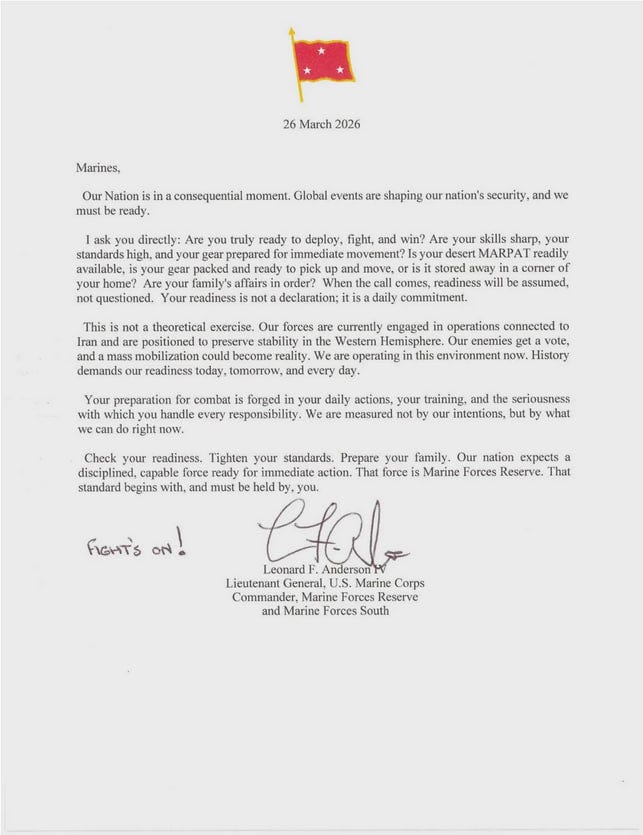
π U.S. reserve readiness posture raised: A directive to Marine Forces Reserve personnel emphasized the possibility of large-scale mobilization, instructing forces to maintain immediate readiness under current operational conditions.
π£οΈ Iranian leadership messaging and internal strain: Iranian leadership publicly rejected negotiation narratives while warning of severe retaliation against any ground incursion. Concurrent reporting indicates internal disagreements at senior levels, alongside concerns that continued conflict could trigger rapid economic deterioration.
π΄ Iraqi militias escalate involvement: Iran-aligned militias in Iraq announced plans to increase missile and drone attacks against Israel, signaling a broader regional expansion of hostilities.
π Operational scale and maritime warnings: U.S. Central Command reported extensive strike activity across thousands of sorties, while European naval forces advised commercial vessels to avoid Yemeni waters due to increased risk following Houthi engagement.
β±οΈ If this update was helpful, please forward it to someone who relies on real-time information from Israel.
π Read on web & subscribe by email: https://www.israelrealtime.com/s/digest
β Support independent reporting: https://www.israelrealtime.com/p/donate