
🌊 IRANIAN ATTACKS AND MARITIME DISRUPTION PRESSURE THE REGION
🕑 Published: July 23, 2026 · 1:32 AM Israel time
🚀 Iranian missile and drone attacks are testing regional defenses:
Iran fired ballistic missiles toward Aqaba, Jordan, where four were intercepted and two struck remote, uninhabited areas. The IDF said no missiles entered Israeli territory, and Israel did not participate in the interceptions. Explosions heard around Eilat were attributed to regional air-defense activity.
Smoke was reported over Manama following another Iranian attack, with Channel 14 reporting that the Israeli Embassy was targeted. Three explosive drones were intercepted near the U.S. Consulate in Erbil, while air defenses were activated near King Abdulaziz Air Base in eastern Saudi Arabia before an all-clear was issued.
Retired Jordanian Lt. Gen. Qasid Mahmoud said Iran is using simpler missiles to distract radar systems before launching more advanced missiles and drones. Some projectiles can reportedly alter course during the final 30–40 kilometers of flight, complicating interception.
The European Union Aviation Safety Agency advised airlines to avoid Jordanian airspace. The United States also completed the evacuation of aircraft from Al Udeid Air Base in Qatar.
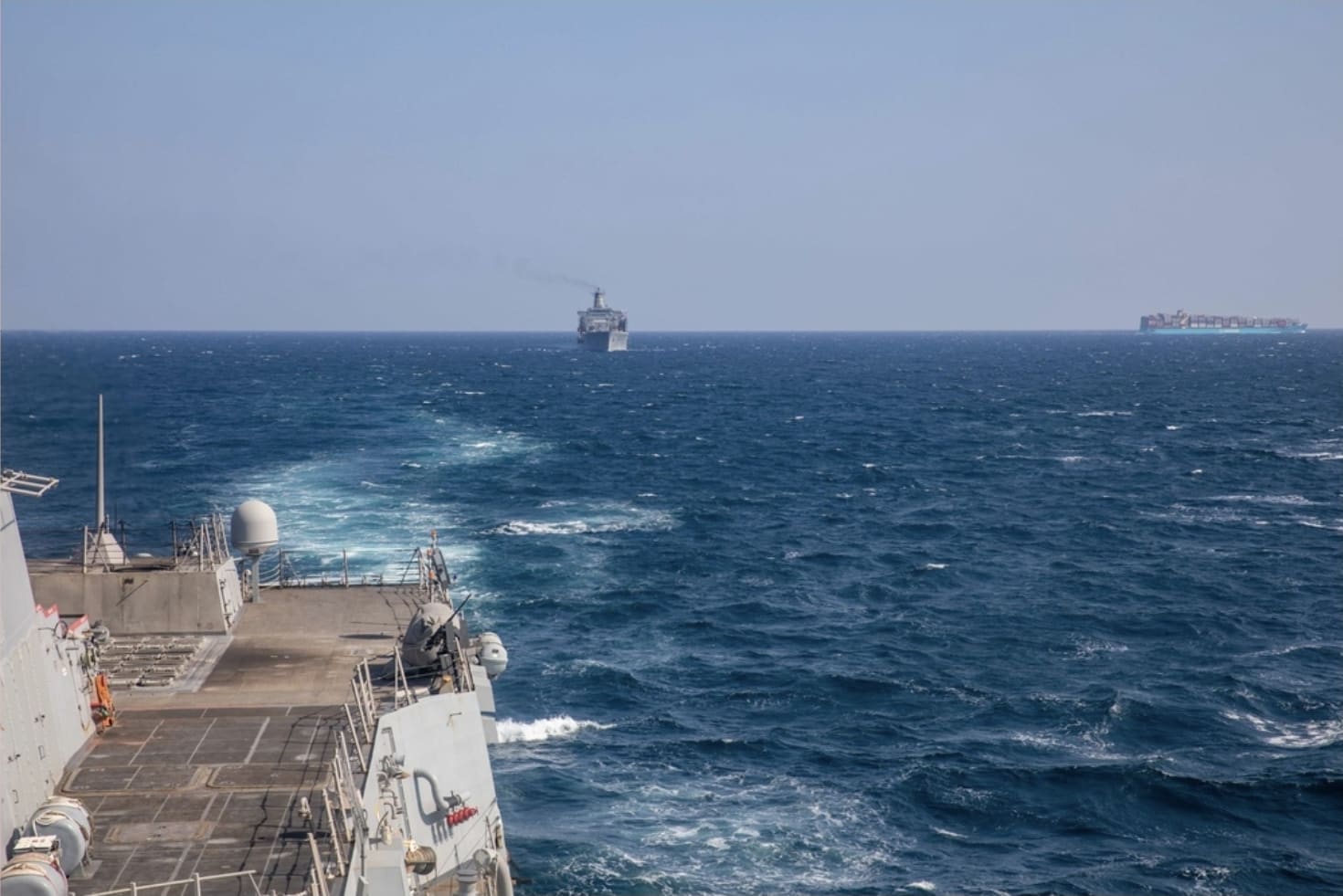
⚓ The Strait of Hormuz and Bab el-Mandeb are becoming parallel pressure points.
Only three commodity vessels crossed the Strait of Hormuz on Tuesday, with no very large crude carriers or LNG tankers recorded, as U.S. forces conducted an 11th consecutive night of strikes.
Trump warned that every future Iranian attack on a vessel in the strait would be answered by the destruction of an Iranian bridge or power plant, including infrastructure near Tehran. Iran responded that attacks on its bridges or power facilities would trigger strikes against regional energy and infrastructure sites linked to U.S. interests.
In the Red Sea, two Asia-bound tankers carrying Saudi crude reversed course near Bab el-Mandeb after Houthi threats against vessels serving Saudi ports. The Bahrain-based U.S. Navy Joint Information Center said the Houthis had completed preparations to attack shipping entering the southern Red Sea. Sources close to the group reportedly said missiles and drones had been positioned near the strait.
Pakistan warned that attacks on Pakistani-flagged vessels or maritime interests would constitute a grave national-security threat. Islamabad reserved the right to use lawful force in self-defense while reaffirming support for Saudi sovereignty and security.
⚛️ The Saudi nuclear agreement is raising long-term strategic concerns in Israe:
Trump approved a 30-year agreement allowing Saudi Arabia to develop a civilian nuclear program and potentially enrich uranium domestically, according to The Wall Street Journal. The agreement is valued at tens of billions of dollars and could permit U.S. companies to establish a uranium-enrichment facility in the Kingdom.
Israeli officials and analysts said the agreement reflects a “decline in Israel’s status” because nuclear cooperation is no longer conditioned on Saudi normalization with Israel.
Former Prime Minister Naftali Bennett called the agreement a “serious strategic blunder,” warning that it could encourage a regional nuclear competition involving Egypt and Turkey while removing a central Israeli diplomatic lever.
Saudi Arabia seeks nuclear power to meet growing cooling and artificial-intelligence energy demands while freeing additional oil for export. Crown Prince Mohammed bin Salman has said Riyadh would “without any doubt” pursue nuclear weapons if Iran acquired them.
🔁 Know someone who should see this? Forward it.
🗨️ Join the discussion, read on web & subscribe by email: https://www.israelrealtime.com/p/subscribe


