
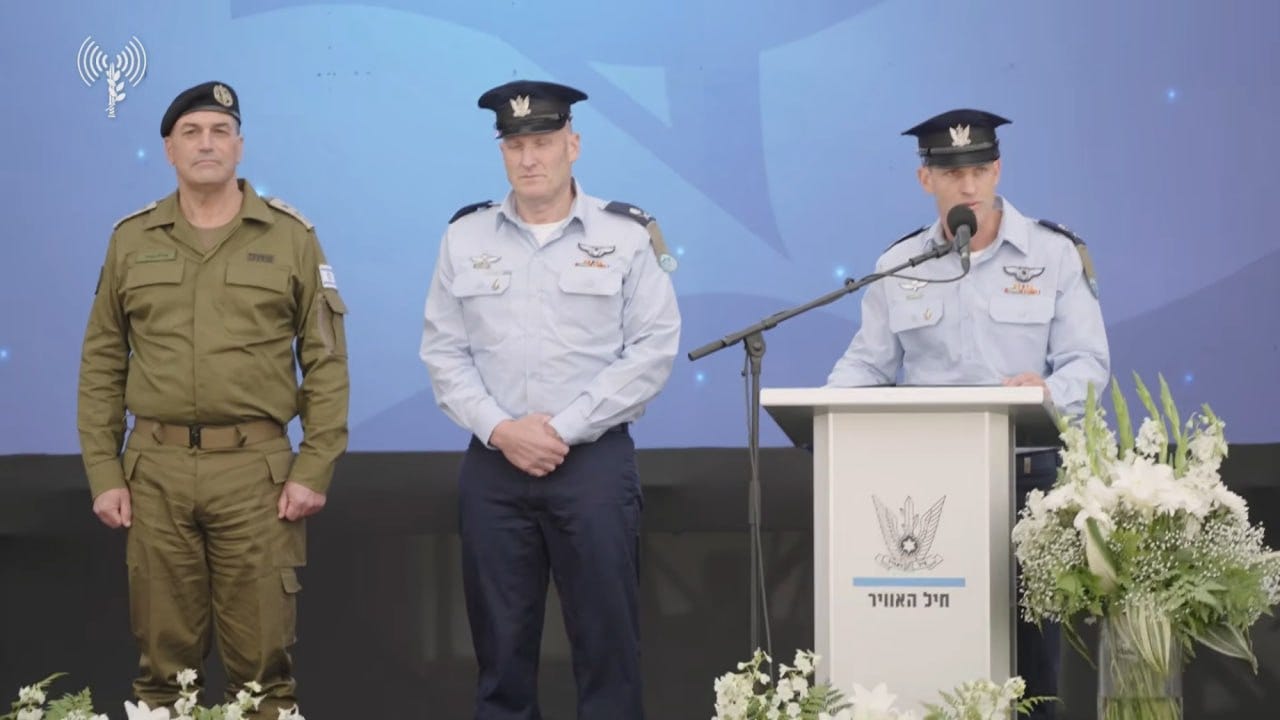
🛡️ IDF READINESS AND RESPONSE POSTURE: IDF Chief of Staff Eyal Zamir states the military remains in full operational readiness and is prepared to respond with force to any Iranian threat. Forces are deployed across all sectors, with active monitoring of developments in the Persian Gulf.
✈️ AIR FORCE MONITORING AND LEADERSHIP TRANSITION: Incoming Israeli Air Force chief Omer Tischler confirms close monitoring of Iran and readiness to deploy air assets eastward if required. He assumes command from Tomer Bar following four years in the role.
🛰️ REGIONAL DEFENSE ENGAGEMENTS: The United Arab Emirates reports that its air defense systems intercepted multiple aerial threats originating from Iran, including ballistic missiles, cruise missiles, and drones.
🇺🇸 U.S. SIGNALING AND STRATEGIC MESSAGING: Donald Trump publicly commented on internal Iranian dynamics while U.S. officials conveyed prior warnings to Tehran ahead of “Project Freedom.” Some officials assess that a renewed military phase could be authorized if diplomatic efforts remain stalled.
♟️ ISRAEL–U.S. STRIKE COORDINATION: Ongoing coordination between Israel and the United States includes contingency planning for potential strikes targeting Iranian energy infrastructure and senior officials, amid concerns over instability in the Strait of Hormuz.
🚢 IRAN’S CONTROL MECHANISM IN THE STRAIT OF HORMUZ: Iran introduced a structured transit system requiring vessels to follow designated corridors under the authority of the newly declared “Persian Gulf Strait Authority.” The IRGC Navy warned that deviation from approved routes could trigger enforcement action.
🇪🇺 EUROPEAN SECURITY SIGNALS: Germany, through Foreign Minister Johann Wadephul, indicated readiness to contribute to maritime security efforts following the conflict. A German reconnaissance vessel is en route to the Mediterranean.
🎖️ U.S. MILITARY READINESS AND INCIDENT PATTERN: Chairman of the Joint Chiefs Dan Caine emphasized rapid deployment capabilities, noting paratroopers remain prepared for immediate combat insertion. He also reported multiple Iranian attacks on U.S. forces since the ceasefire declaration.
⏳ NUCLEAR TIMELINE ASSESSMENT: Assessments cited by Reuters indicate that Iran’s estimated timeline to produce a nuclear weapon remains unchanged at approximately one year despite recent U.S.–Israeli strikes.
🌍 INTERNATIONAL RESPONSES AND DIPLOMATIC POSITIONING: South Korea is reviewing potential participation in U.S.-led operations, while Iran’s Foreign Minister Abbas Araghchi framed the crisis as political rather than military and cautioned against renewed escalation.
⚔️ CEASEFIRE STATUS AND MULTI-FRONT CONTEXT: U.S. leadership rejected Iran’s ceasefire terms, while Israel is assessing renewed operations in Gaza following Hamas’ refusal to disarm. Hezbollah has also signaled opposition to any Israel–Lebanon agreement.
🏛️ DIPLOMATIC ACTION AT THE UN: The United States is preparing to co-draft a UN Security Council resolution with Bahrain and Gulf partners aimed at holding Iran accountable for actions in the Strait of Hormuz. The proposal would require Iran to cease sea mine deployment, halt tolling measures, and disclose mine locations.
🛢️ ENERGY AND MARKET IMPACT: Chevron CEO Mike Wirth reports emerging physical oil supply shortages linked to disruption in the Strait of Hormuz. Brent crude prices rose above $119 per barrel following reports of an Iranian drone strike on a UAE petroleum facility.
🔁 If this gave you clarity — forward it.
🗨️ Join the discussion, read on web & subscribe by email: https://www.israelrealtime.com/p/subscribe


